
Built by engineers who run
Your AI running coach, in your ear and on your wrist
Samado works out your real paces from the runs you have already done, then builds sessions around them. It calls each rep out loud while you run and tells you afterwards which ones you got wrong.
Free on iPhone. Requires iOS 18 or later.
- Apple Watch
- Apple Health
- Garmin
- Strava
How Samado builds your running workouts
Three things happen before you ever press start, and none of them involve you guessing what pace you can hold.
- 01
It reads your history first
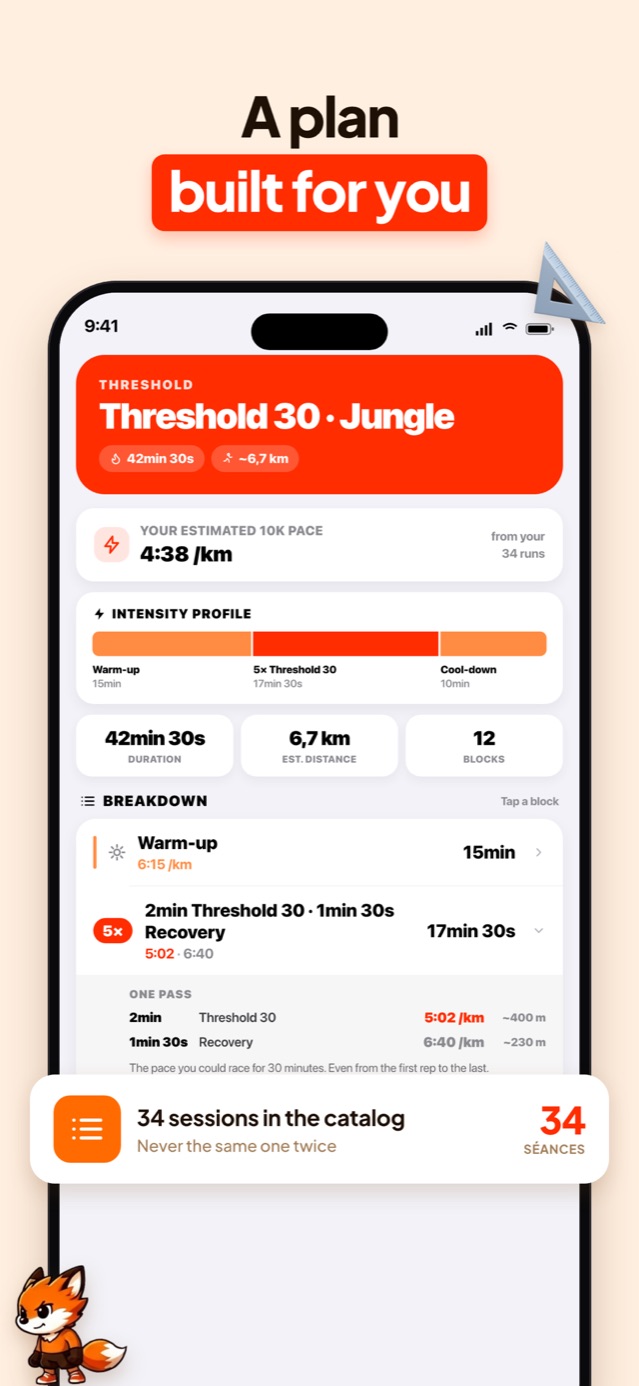
Connect Apple Health or Strava and Samado goes through the runs already sitting there. Out of that it estimates what you could actually hold over 10K, and every target pace in every session is derived from that one number.
- 02
Sessions arrive as blocks
A session is not “run 8K”. It is a warm-up, five reps at 5:02/km, ninety seconds of recovery at 6:40/km between them, then a cool-down. Twelve blocks, each with its own pace target. There are 34 of them in the catalog.
- 03
You get told during, not after
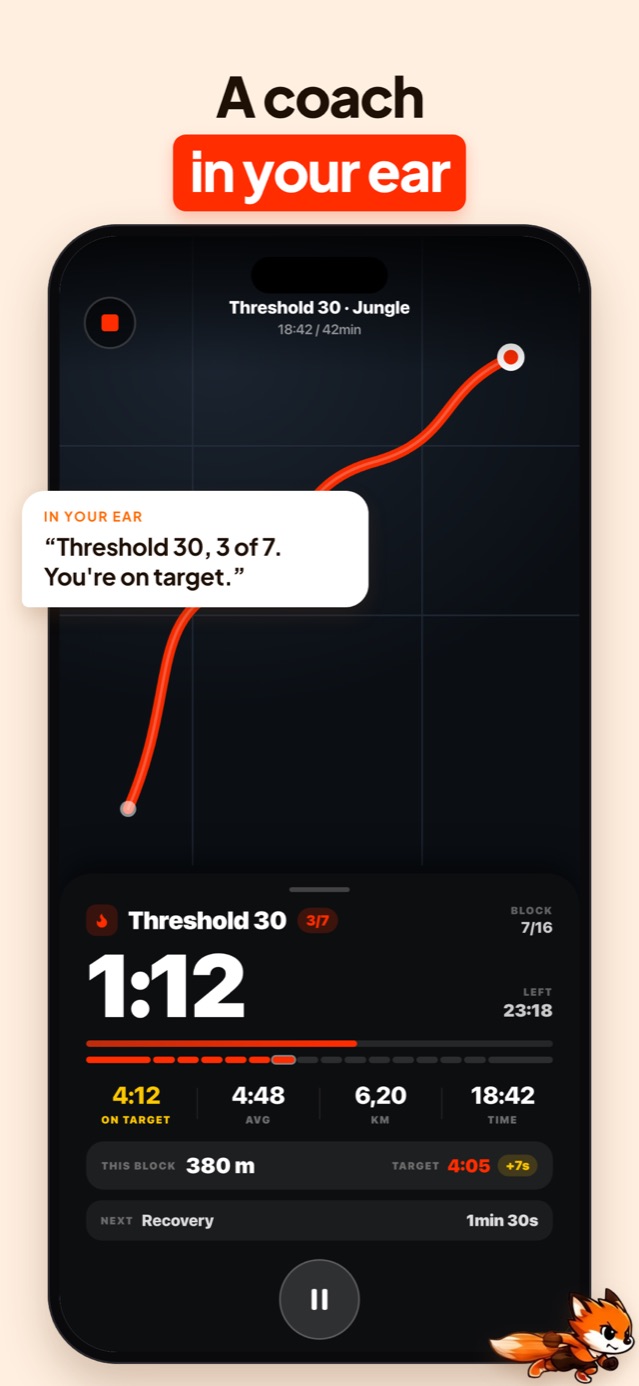
The rep number and whether you are on target come through your headphones while you run. Drifting seven seconds fast on rep three is worth knowing at rep three.
Structured sessions, from the plan to the debrief
Every screen below is the app as it ships. Nothing here is a mockup of something coming later.
An AI running coach that reads your data

Paces that come from your legs, not a dropdown
No “are you a beginner, intermediate or advanced” question at signup. Samado estimates your 10K pace from your logged runs and re-estimates it as you keep training.

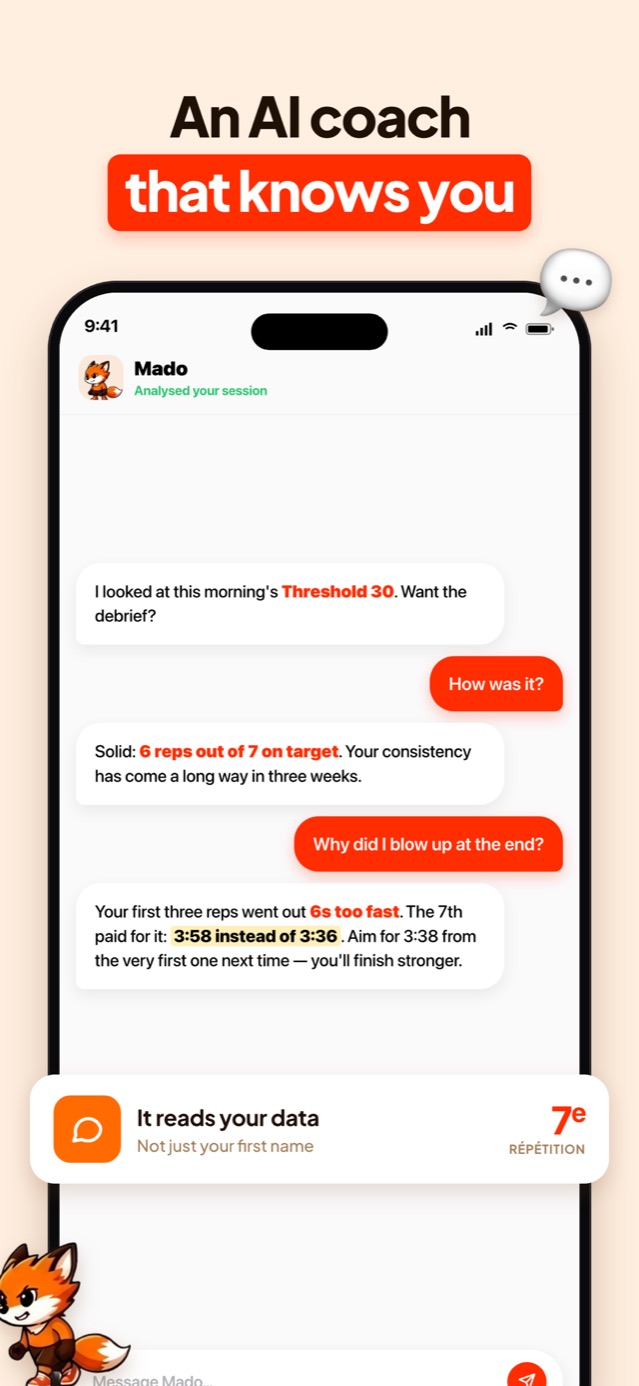
A coach who has read the splits
Ask Mado why a session fell apart and he answers with the numbers: which rep went out too fast, by how much, and what to aim for next time. No participation trophies.

Every rep measured on its own
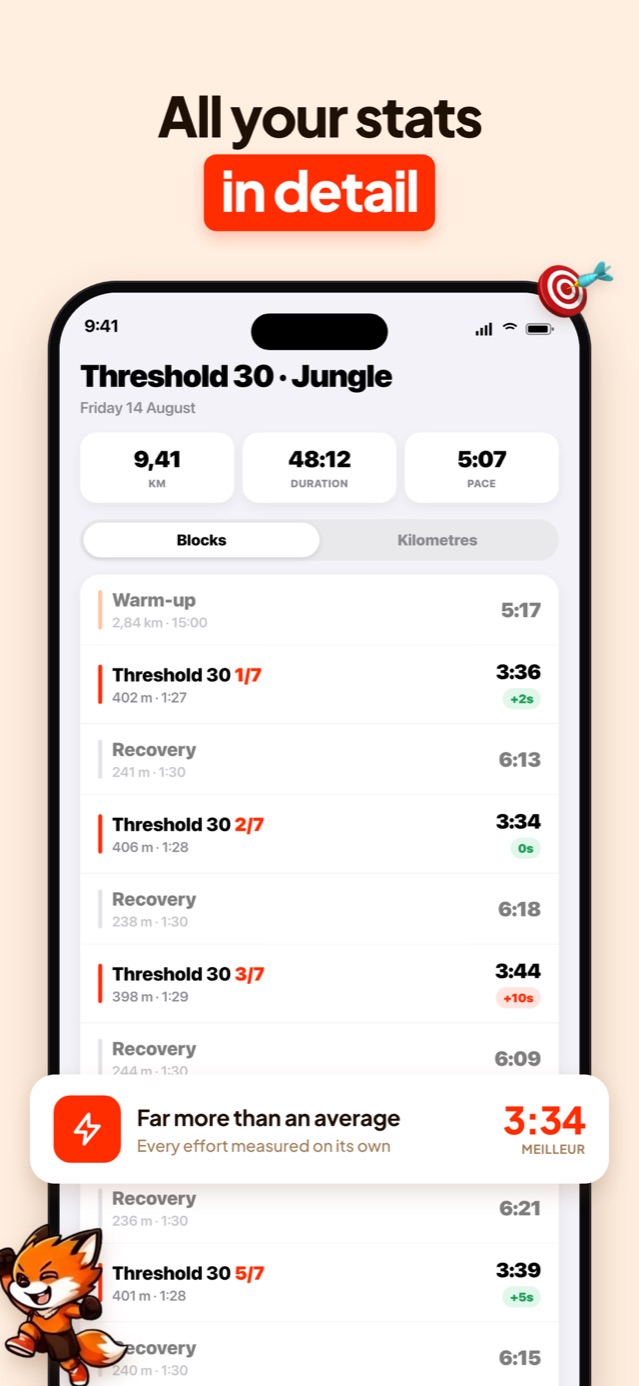
The run summary breaks the session into its blocks and scores each one against its target. Your best rep and your worst rep stop hiding inside the average.
Training guides
Threshold pace, heart rate zones, interval structure, race plans. The reference material behind the sessions in the app.

What is threshold pace in running, and how do you hit it?
Threshold pace is the effort you could race for about an hour. How to work yours out from a race, a time trial or heart rate, and how to run the session.
Read the guide
How to find your easy run pace, and stop running it too fast
Easy pace is 60 to 90 seconds per km slower than 10K pace. Three ways to check you are going easy enough, and why the grey zone in between costs you.
Read the guide
Interval training for runners: how to structure a session
The four numbers that define an interval session, how many repetitions to run, how long recovery should be, and where intervals belong in a training week.
Read the guide
Heart rate zones for running, explained
What the five running heart rate zones are for, how to set yours without a lab test, and why the zones your watch shipped with are probably wrong.
Read the guide
How to train for a 10K in 8 weeks
An eight week 10K build for runners who can already run 40 minutes: what each week contains, the three sessions that do the work, and how to taper for race day.
Read the guide
Half marathon training plan for beginners
How long a first half marathon build should be, how to grow the long run safely to 18 km, what the other runs are for, and how to pace race day.
Read the guide
How to improve your 5K time
Work out where your 5K is losing time, then fix it: short repetitions to raise your top end, threshold work to raise the floor, and a pacing plan for the race.
Read the guide
How to run structured workouts on Apple Watch
How to run a structured interval session on Apple Watch: what the screen needs to show, how to set one up, and whether you can leave the iPhone at home.
Read the guideQuestions runners actually ask
What is threshold pace in running?
Threshold pace is roughly the pace you could race flat out for about an hour, or a little under. It sits just below the effort where lactate starts piling up faster than you clear it, which is why it feels hard but controlled rather than desperate. Samado calculates yours from your logged runs and prescribes it block by block.
How fast should my easy runs be?
Slow enough to hold a conversation in full sentences, which for most runners is 60 to 90 seconds per kilometre slower than 10K pace. If your easy days and your hard days land within twenty seconds of each other, you are training in one gear.
How do I structure an interval session?
Pick a target pace, a rep length, and a recovery that is short enough to keep the effort accumulating. Five to eight reps of two to five minutes covers most of what a distance runner needs. Samado ships 34 pre-built sessions, so you pick one rather than designing it.
What heart rate zone should I run in?
Easy runs sit in zone 2, roughly 60 to 70 percent of your maximum. Threshold work lands in the top of zone 3 and into zone 4. Zone 5 is for short reps and should be a small slice of your week, not a habit.
Can I train for a 10K in 8 weeks?
Yes, if you can already run 40 minutes without stopping. Eight weeks is enough for three to four runs a week, one hard session, one long run, and a taper in the last five days. It is not enough to go from nothing to a 10K.
How long does it take to train for a half marathon?
Twelve to sixteen weeks if you are starting from a base of about 20 km a week. The long run is what dictates the timeline: it needs to climb to 16 to 18 km, and adding more than a kilometre or two per week to it is how people get hurt.
How do I run a faster 5K?
Most amateur 5K times improve from two things: raising the ceiling with short reps at 5K pace or faster, and raising the floor with threshold work so that pace stops feeling like a sprint. Running every session at the same medium effort improves neither.
Does Samado work on Apple Watch?
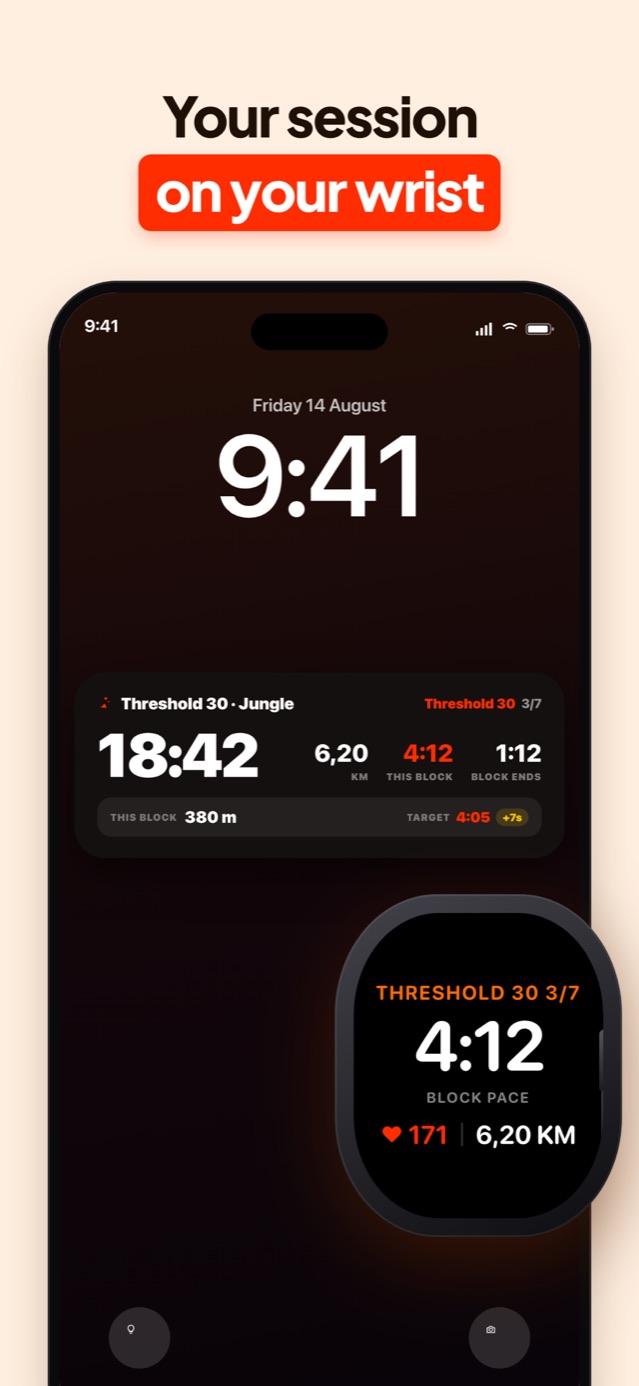
It does. The watch shows the current block, your pace inside that block and your heart rate, and the same numbers appear in a Live Activity on the iPhone lock screen. The audio cues play through whichever headphones are connected.
Is Samado free?
The app is free to download and there is a subscription inside it for the full training catalog and the AI coach. You can cancel from your App Store account settings at any time.
Does Samado sync with Strava and Apple Health?
Yes, both, plus Garmin. Samado reads the runs already in Apple Health to build your pace estimates, and writes your Samado sessions back so the rest of your setup stays in one place.
Stop guessing what pace to run
Samado works out your paces from the runs you have already done, then talks you through the session while you run it. Free on iPhone, iOS 18 or later.
Download on the App Store