
How to train for a 10K in 8 weeks

Eight weeks is enough to build a 10K if you can already run 40 minutes without stopping. The shape is three to four runs a week: one hard session, one long run, and the rest easy, with the last five days spent doing less. If you are starting from nothing, give yourself twelve weeks instead and spend the first four just running.
How to build an eight week 10K plan
- Check your starting point. You should be able to run 40 minutes continuously and have been running at least twice a week for the past month. If not, spend four weeks building that first.
- Weeks 1 and 2: establish the rhythm. Three or four runs a week. One session of short repetitions, one long run of 50 to 60 minutes, the rest easy. Total 20 to 25 km.
- Weeks 3 to 5: add threshold work. Replace one easy run with a threshold session of 20 to 30 minutes at comfortably hard effort, broken into repetitions. Long run climbs toward 70 minutes.
- Week 6: the biggest week. Peak volume and the hardest session of the block. Six to eight repetitions of 3 minutes near 10K pace, plus your longest run.
- Week 7: pull back. Cut volume by about 25 percent while keeping one short sharp session so your legs stay awake.
- Week 8: race week. Half the usual volume. One easy run with four 90 second efforts at race pace three days out, then two very easy days, then race.
What you need before week one
The honest prerequisite is 40 minutes of continuous running and a month of consistency behind you. That is not the same as being fit. It means your connective tissue has seen regular load recently, which is what decides whether eight weeks of increasing work makes you faster or makes you injured.
You also want a rough sense of your current 10K pace, because every target in the plan hangs off it. A parkrun time works, or 20 minutes run hard on a flat route. Without that reference you will be guessing at paces for eight weeks and probably guessing high.
The shape of the eight weeks
Weeks 1 and 2 establish the rhythm at 20 to 25 km, with one session of short repetitions and one long run of 50 to 60 minutes. Nothing here should feel hard yet.
Weeks 3 to 5 are where the work happens. One threshold session, one long run climbing toward 70 minutes, and the rest easy. Volume rises by about 10 percent a week and then holds.
Week 6 is the peak: the biggest long run and the hardest session, typically six to eight repetitions of three minutes near 10K pace with 90 seconds of jogging between them. Week 7 drops volume by a quarter. Week 8 halves it again and gets you to the start line with fresh legs.
The three sessions that do the work
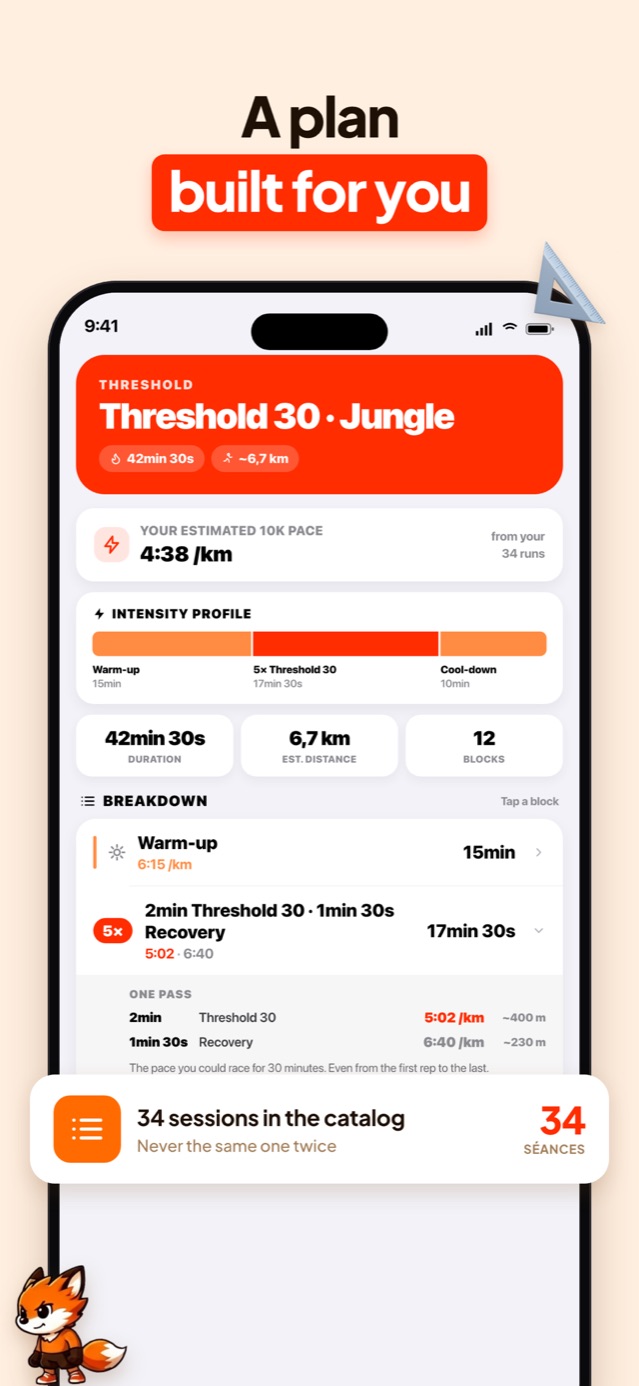
The threshold session raises the pace you can hold before fatigue sets in. Twenty to thirty minutes at comfortably hard effort, broken into repetitions of five to ten minutes. This is the session that moves a 10K time most in eight weeks.
The interval session makes race pace feel less frantic. Repetitions of two to three minutes at or slightly faster than 10K pace, with equal or slightly shorter recovery. Five to eight of them.
The long run is the boring one and it is not optional. Sixty to seventy-five minutes at genuinely easy pace. Its job is aerobic development and durability, and running it too fast is the most common way to wreck the following Tuesday.
Race week
Cut the volume in half but keep some intensity. Three days out, run easy for 25 minutes with four 90 second efforts at race pace in the middle. That keeps your legs sharp without adding fatigue you cannot clear in 72 hours.
The two days before the race are easy running or nothing at all. Resist adding a session because you feel fresh. Feeling fresh is the entire point of the week, and the fitness was banked three weeks ago.
On the day, run the first kilometre slower than goal pace. A 10K punishes a fast start more than almost any other distance: the twenty seconds you bank in the first kilometre cost you a minute in the last two.
Frequently asked
Can a complete beginner train for a 10K in 8 weeks?
Not comfortably. Eight weeks assumes you can already run 40 minutes without stopping. From a standing start, give yourself twelve to sixteen weeks and spend the first four building continuous running before any structured session.
How many kilometres a week should I run for a 10K?
Between 20 and 40 km for most amateur runners, spread over three to four runs. Consistency across the eight weeks matters more than the peak number.
Keep reading

What is threshold pace in running, and how do you hit it?
Threshold pace is the effort you could race for about an hour. How to work yours out from a race, a time trial or heart rate, and how to run the session.
Read the guide
How to find your easy run pace, and stop running it too fast
Easy pace is 60 to 90 seconds per km slower than 10K pace. Three ways to check you are going easy enough, and why the grey zone in between costs you.
Read the guide
Half marathon training plan for beginners
How long a first half marathon build should be, how to grow the long run safely to 18 km, what the other runs are for, and how to pace race day.
Read the guideRun the session instead of reading about it
Samado turns all of this into blocks with pace targets, calls them out while you run, and scores every repetition afterwards.
Download on the App Store