
Interval training for runners: how to structure a session

An interval session is defined by four numbers: how long each repetition is, how fast you run it, how long you recover, and how many you do. Get those four right and the session works. Most sessions that fail do so because the pace was borrowed from someone else or the recovery was too generous.
How to build an interval session
- Choose the repetition length. Two to five minutes suits most distance runners. Shorter repetitions of 30 to 90 seconds develop speed and running economy, longer ones build the ability to hold a hard pace.
- Set the pace from a real result. Derive the target from a recent race or time trial rather than picking a round number. Short repetitions run near 5K pace or faster, longer ones near 10K pace.
- Pick a recovery that keeps the effort accumulating. Use roughly half to equal the repetition duration, jogged rather than stood still. Longer recovery turns the session into a set of unrelated sprints.
- Decide how many repetitions. Aim for 12 to 25 minutes of total work at pace. Five to eight repetitions covers most sessions. Stop while you could still do one more.
- Bookend it properly. Warm up for 10 to 15 minutes of easy running, and cool down for 10. Skipping the warm-up is why the first repetition always feels the worst.
The four numbers that define the session
Repetition length comes first because it decides what the session trains. Thirty to ninety seconds develops speed and running economy. Two to five minutes builds the ability to hold a hard pace for a long time, which is what a 5K and a 10K actually demand.
Pace has to come from a real result. Short repetitions belong near 5K pace or a touch quicker, longer ones near 10K pace. Borrowing a target from a friend or a training plan written for someone else is the fastest way to blow up in repetition six.
Recovery is the number people get wrong most often. Somewhere between half the repetition duration and the same duration works, jogged rather than standing around. Take three minutes off after a two minute repetition and you have built a set of unrelated sprints with no accumulated fatigue.
Repetition count follows from total time at pace. Between 12 and 25 minutes of actual work is the useful band. Five to eight repetitions gets you there for most session shapes, and the right number is one fewer than the number that would break you.
Why the average pace tells you nothing
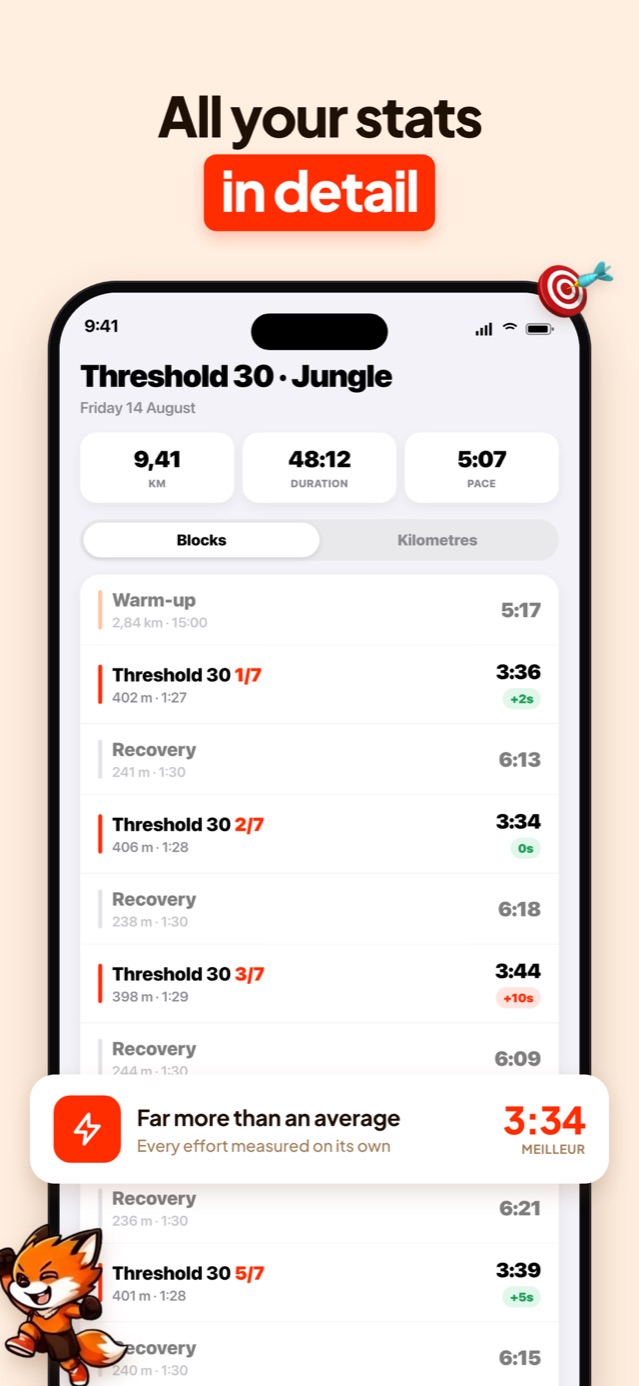
A session with seven repetitions in it produces an average pace that describes none of them. The average blends your repetitions, your recoveries, your warm-up and your cool-down into a single figure that would look identical whether you nailed every repetition or faded from the third one onward.
What you want is each repetition scored against its own target. That is where the useful information is: whether you started too fast, whether you held on, which repetition was your best, and by how many seconds you missed.
Where intervals belong in the week
One interval session a week is plenty alongside a threshold session and a long run. Two hard sessions in a week is a reasonable ceiling for anyone not being coached in person, and they need at least two easy days between them.
The session before an interval day should be easy, and so should the one after. If you are consistently too flat to hit your targets, the problem is almost never the interval session itself. It is the medium-effort run you did the day before.
Starting out without hurting yourself
If intervals are new to you, begin with fartlek: one minute hard, two minutes easy, repeated eight times, with no pace target at all. It gives your legs the change of gear without asking you to hit a number you have not earned yet.
Move to structured repetitions once you have a race result or time trial to base the paces on. Three to four weeks of fartlek before that is not a delay, it is the part that stops your first proper interval session from being your last one for a month.
Frequently asked
How often should I do interval training?
Once a week for most runners, twice at the very most, and only when the rest of the week is genuinely easy. Two hard sessions need at least two easy days between them in both directions.
Are intervals safe for beginners?
Once you can run 30 minutes continuously, yes. Start with fartlek rather than track repetitions: one minute hard, two minutes easy, eight times, with effort as the only target and no pace to chase.
Keep reading

What is threshold pace in running, and how do you hit it?
Threshold pace is the effort you could race for about an hour. How to work yours out from a race, a time trial or heart rate, and how to run the session.
Read the guide
How to improve your 5K time
Work out where your 5K is losing time, then fix it: short repetitions to raise your top end, threshold work to raise the floor, and a pacing plan for the race.
Read the guide
How to run structured workouts on Apple Watch
How to run a structured interval session on Apple Watch: what the screen needs to show, how to set one up, and whether you can leave the iPhone at home.
Read the guideRun the session instead of reading about it
Samado turns all of this into blocks with pace targets, calls them out while you run, and scores every repetition afterwards.
Download on the App Store