
Half marathon training plan for beginners

A first half marathon needs twelve to sixteen weeks if you can already run about 20 km a week. The long run drives the timetable: it has to climb from wherever you are now to 16 to 18 km, and it can safely grow by only a kilometre or two per week. Everything else in the plan is built around protecting that one run.
How to build a first half marathon plan
- Set the timeline from your long run. Take your current longest run and count how many weeks it takes to reach 18 km at 1 to 2 km added per week, including a cutback every fourth week. That is your plan length.
- Fix the weekly structure. Four runs a week: one long, one threshold session, two easy. Three runs works if the long run and one quality session are both protected.
- Grow the long run in steps. Add 1 to 2 km per week for three weeks, then cut back by a third in the fourth. Repeat. The cutback week is where the adaptation actually lands.
- Practise race pace inside the long run. From about week eight, finish some long runs with 3 to 5 km at goal half marathon pace. This teaches pacing on tired legs, which is what race day is.
- Taper for two weeks. Cut volume by 30 percent, then by 50 percent. Keep one short session at race pace in each week so your legs remember the rhythm.
How long you actually need
Count backwards from the long run. If your longest run right now is 8 km and you need to reach 18 km, that is ten kilometres of growth at one to two per week, plus a cutback week every fourth week, plus a two week taper. Fourteen to sixteen weeks, and there is not much room to argue with the arithmetic.
If you are already running 14 km comfortably, twelve weeks is plenty and the extra time goes into quality rather than distance. Starting from under 5 km, add a preliminary block and treat the half marathon as a five month project rather than a three month one.
Building the long run without breaking
One to two kilometres per week, then a cutback. The cutback week is the part beginners skip and the part that makes the whole thing work: three weeks of building followed by one week at roughly two thirds of the volume, which is when your body actually absorbs the previous three.
Run it slowly. Long run pace is easy pace, which for most people is 60 to 90 seconds per kilometre slower than 10K pace. The temptation to prove something on the long run is strong and it is the single most common reason first-timers arrive at week ten too tired to continue.
You do not need to run 21 km in training. Reaching 18 km is enough. Race day adrenaline, a taper and other runners around you cover the last three kilometres, and the extra fatigue from a full-distance training run costs more than the confidence it buys.
What the other runs are for
The threshold session is your one piece of quality. Twenty to thirty minutes at comfortably hard effort, broken into repetitions. It raises the pace you can sustain, which for a half marathon matters more than top-end speed.
The easy runs are recovery and volume at the same time. Thirty to forty-five minutes, conversational, and short enough that you finish willing to run again tomorrow. Their purpose is to add aerobic time without adding stress.
From about week eight, start finishing some long runs with three to five kilometres at goal race pace. Running your target pace on legs that already have 12 km in them is a rehearsal for the only part of the race that is genuinely difficult.
Pacing the race
Pick a goal pace you can defend from your training rather than one you would like to be capable of. A good rule: the pace you held for your best 10K, plus 20 to 30 seconds per kilometre.
Run the first five kilometres at that pace or a fraction slower. Everyone around you will be going out too fast, and you will pass a good number of them between kilometre 15 and the finish. The half marathon rewards patience more than any other common race distance.
Take on fluid from about 45 minutes and something with sugar in it if the race will take you longer than about 100 minutes. Practise both on your long runs. Race day is a bad time to discover how your stomach feels about a gel.
Frequently asked
How many times a week should I run for a half marathon?
Four is the sweet spot for a first one: a long run, a threshold session and two easy runs. Three works if you protect the long run and one quality session, and five is only worth it once you have a season or two behind you.
Should I run the full 21 km before race day?
No. Reaching 16 to 18 km in training is enough. The taper, race day adrenaline and the crowd around you cover the rest, and a full-distance training run adds fatigue that outweighs the confidence.
Keep reading

How to train for a 10K in 8 weeks
An eight week 10K build for runners who can already run 40 minutes: what each week contains, the three sessions that do the work, and how to taper for race day.
Read the guide
How to find your easy run pace, and stop running it too fast
Easy pace is 60 to 90 seconds per km slower than 10K pace. Three ways to check you are going easy enough, and why the grey zone in between costs you.
Read the guide
What is threshold pace in running, and how do you hit it?
Threshold pace is the effort you could race for about an hour. How to work yours out from a race, a time trial or heart rate, and how to run the session.
Read the guideRun the session instead of reading about it
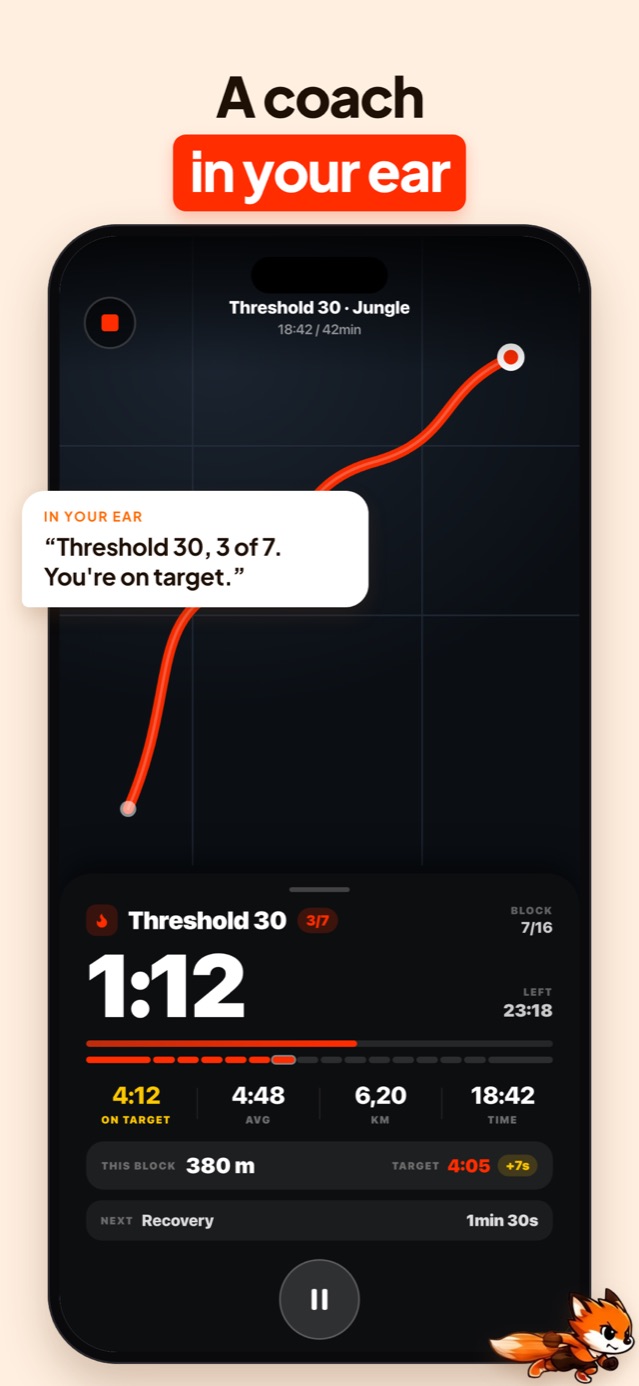
Samado turns all of this into blocks with pace targets, calls them out while you run, and scores every repetition afterwards.
Download on the App Store